




Ceramic Rubber Composite Pad
Product Introduction
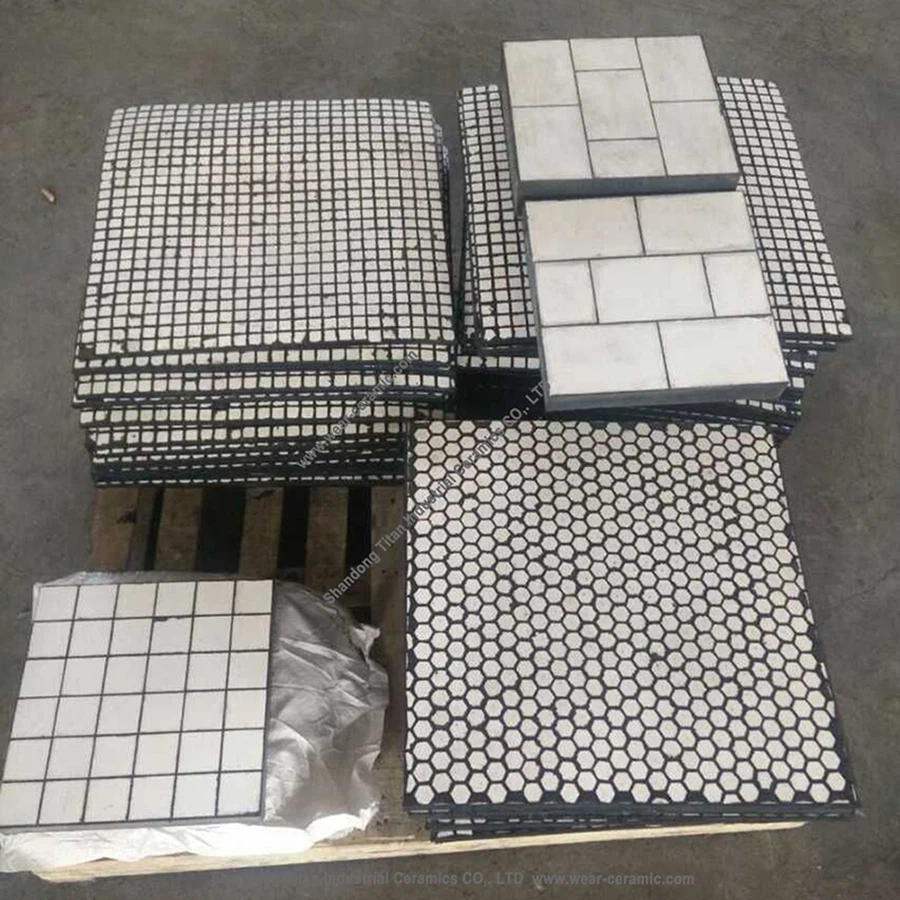
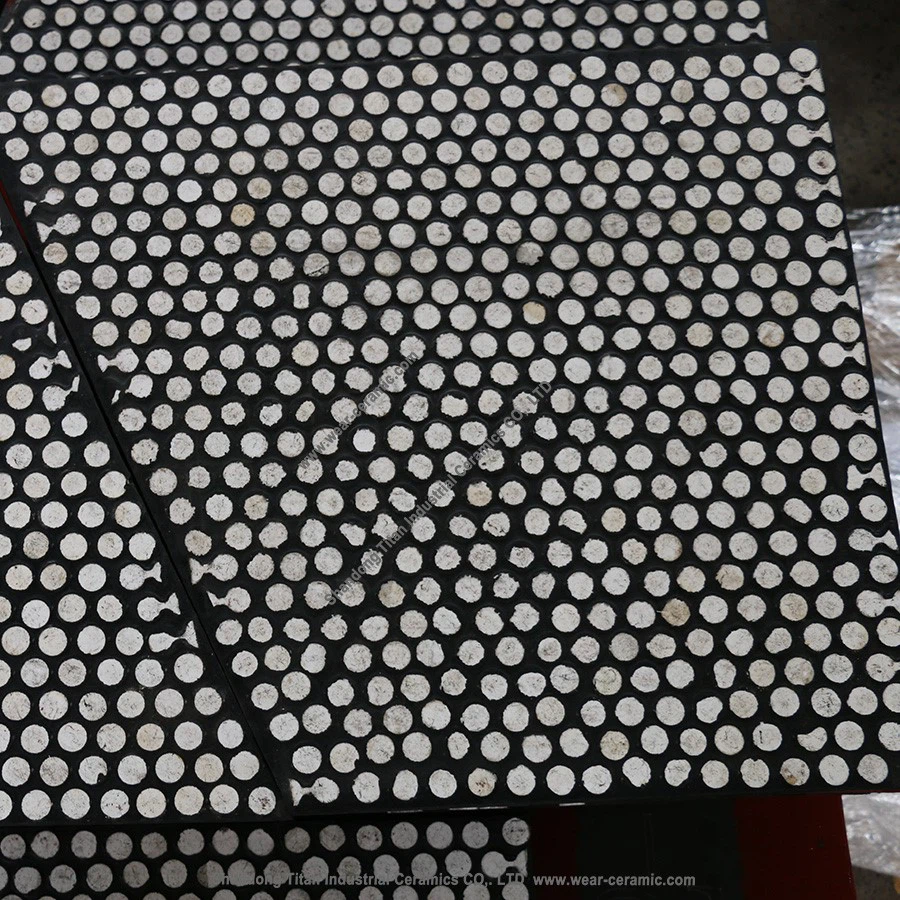
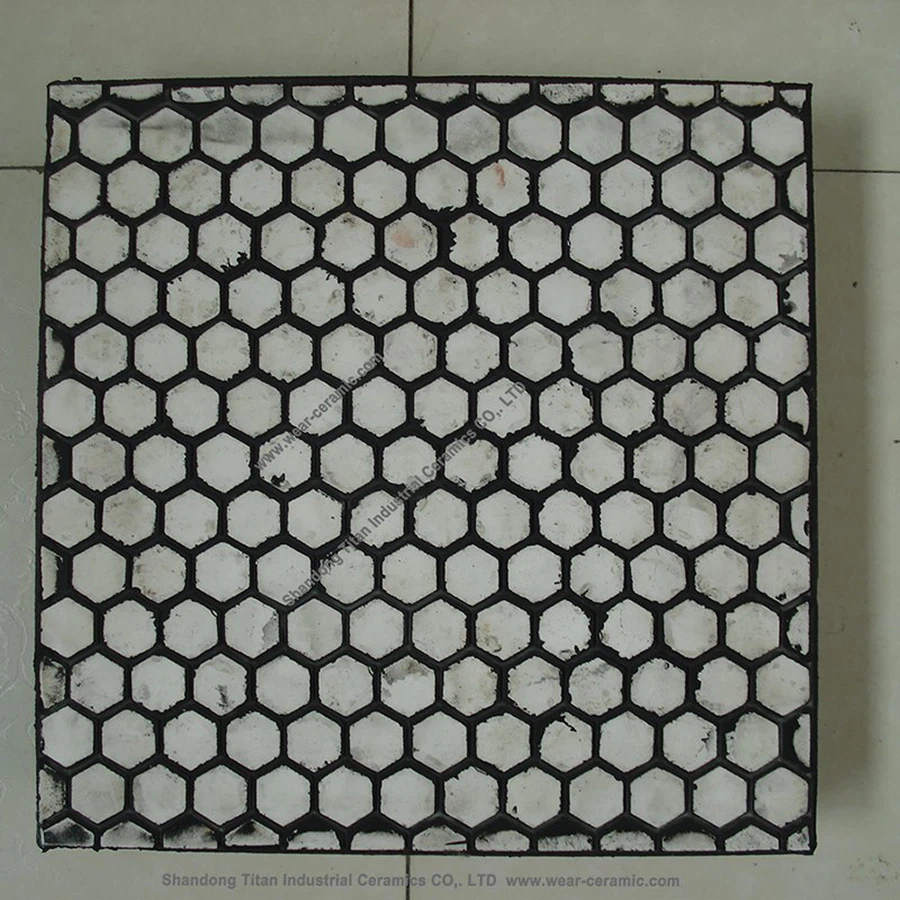
TITAN Ceramic Rubber Composite Pads combine a hard ceramic wear surface with a resilient rubber backing to protect equipment exposed to continuous abrasion and material impact. Customizable in dimensions, thickness, and mounting configuration, they provide practical lining solutions for demanding bulk material handling systems.Ceramic rubber composite pad is a composite material that combines ceramic and rubber materials.It typically consists of ceramic powder or particles mixed with a rubber substrate to combine the best qualities of both materials. As a result, it has high wear, corrosion, and compression resistance, can effectively shield equipment and pipelines, lowers material costs and weight, and is used extensively in the chemical, mining, power, and other industries.The main characteristics of ceramic rubber composite pad include: High wear resistance; High chemical resistance;Good compression performance; Good impact resistance; Suitable for high and low temperature environment.
Key Features and Benefits
1. High Abrasion Resistance
The ceramic layer is typically manufactured from high-alumina material. TITAN offers alumina ceramic options such as 92% and 95% grades, with representative Mohs hardness of 9. The hard surface helps resist sliding abrasion from ore, coal, sand, and other abrasive materials, reducing wear on the underlying equipment.
2. Impact Absorption
Unlike a rigid ceramic lining used alone, the rubber backing provides cushioning when bulk materials strike the equipment surface. This helps reduce direct impact on the ceramic components and supports wear protection in transfer points where both abrasion and impact occur.
3. Flexible Installation Options
The pad can be supplied in different ceramic shapes, dimensions, and thicknesses to suit the equipment layout. Depending on the design, installation options may include adhesive bonding or a steel-backed structure with bolts or welded attachments. Correct configuration helps simplify installation and replacement during scheduled maintenance.
4. Improved Maintenance Efficiency
By protecting high-wear areas, a ceramic rubber lining can help reduce the frequency of repairs and unplanned shutdowns. Its service life depends on material properties, impact energy, particle size, operating temperature, and installation quality. Selecting the right combination of ceramic thickness and rubber cushioning is therefore essential for reliable performance.
Properties
1.Good durability, high-strength shock and vibration resistance, and wear resistance.
2. Effective sealing may protect mechanical equipment from outside moisture and dust while ensuring proper operation.
3. Ceramic rubber composite mats have a good noise-reducing effect, effectively reducing mechanical equipment noise and safeguarding worker hearing health.
4. Simple installation,no need for heavy machinery; only has to be put underneath mechanical equipment.
5. Simple maintenance, only the damaged portion of the mat has to be replaced; the complete mat need not be replaced.
6. Strong corrosion resistance,ceramic rubber composite pad is capable of withstanding the corrosion of acids, alkalis, and other dangerous chemicals.
7.Low cost – Compared to other mats, ceramic rubber composite mats are inexpensive and have a long lifespan, which may help businesses cut expenditures.
Technical data
|
Series |
Rubber |
|
Bulk density(g/cm3) |
1.4 |
|
Tensile strenth at break (MPa) |
≥14 |
|
Elongation at break (%) |
≥250 |
|
Shore hardness (HA) |
48-65 |
|
Adhesive between steel and rubber (MPa) |
≥3.5 |
|
Adhesive between rubber and ceramic (MPa) |
≥3.5 |
|
Thermal conductivity (normal temperature) (W/M·K) |
2 |
|
Aging period (years) |
≥1.5 |
|
Working temperature(℃) |
-50-200 |
Application
1. The production of machinery can utilize ceramic rubber composite mats to cushion and absorb stress from industrial machinery, enhancing the stability and robustness of mechanical equipment.
2. The ceramic rubber composite mats utilized in the aerospace sector may be used to dampen vibrations and absorb shocks for satellites and airplanes, increasing their stability in zero-gravity conditions.
3. The ceramic rubber composite mat may be used to absorb stress and cushion the chassis, engine, and suspension systems of automobiles, among other things, to increase the comfort and stability of the vehicle.
4. The railway transportation sector: Ceramic rubber composite mats may be utilized to cushion and absorb stress on high-speed tracks, bridges, and tunnels, enhancing train stability, safety, and operational effectiveness.
5. The ceramic rubber composite mat may be utilized for seismic and anti-seismic building purposes, minimizing earthquake-related building damage and destruction.
6. The optoelectronic industry may utilize ceramic rubber composite mats to cushion and absorb shocks for optical instruments, semiconductor equipment, and precision machinery, among other things, to increase productivity and product quality.
7. The ceramic rubber composite mat may be utilized in the medical device sector to cushion and absorb stress from medical equipment, increasing its stability and safety.
FAQ
01.What is the main advantage of a ceramic rubber composite pad?
02.Can the pads be customized?
03.Can the product be supplied with a steel backing plate?
04.Which industries use these wear protection pads?
05.What information is needed for a quotation?
Looking for a reliable Ceramic Rubber Composite Pad for your equipment?
Contact TITAN with your required dimensions, material type, operating temperature, impact conditions, and preferred installation method. Our team can help evaluate a suitable configuration and provide a quotation based on your application.
Hot Tags: ceramic rubber composite pad, manufacturers, suppliers, factory, price, made in China, Wear Resistant Cladding Plate, Bimetallic Wear Resistant Plate, Wear Resistant Alumina Ceramic Pipe Elbow, Rubber coating Roller, Chromium Carbide Plate, Wear resistant Rubber ceramic Composite Plate
You Might Also Like



Send Inquiry