


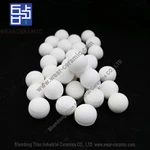
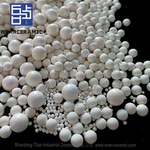


Ball Mill Alumina Wear-resistant Lining Material

Product Introduction
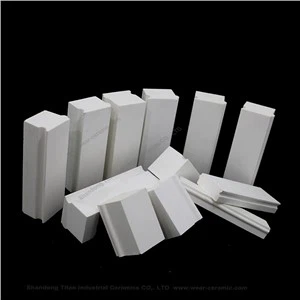
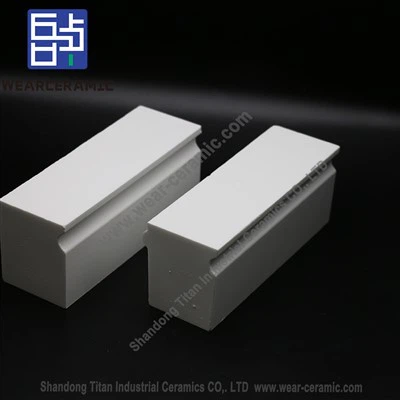
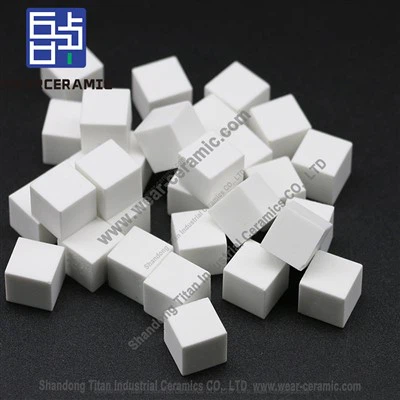
The wear-resistant alumina lining material of ball mill generally uses high-purity alumina as the main raw material, which is made by hot press forming, sintering and other processes. It has high hardness, high density, excellent wear resistance, high temperature resistance, corrosion resistance and thermal conductivity, which can effectively protect the inside of the ball mill from wear and corrosion, extend the service life of the equipment and reduce the production cost.
Features
The following benefits of alumina lining over alternative linings for ball mills:
1.Better wear resistance:Because alumina is a hard substance with excellent wear resistance, it can efficiently withstand wear and scratches from ball mills during production.
2.superior corrosion resistance:: Alumina material exhibits superior corrosion resistance since it can function in challenging conditions like acid, alkali, and salt.
3.Greater thermal stability: The wear-resistant alumina lining of the ball mill will not experience issues like embrittlement and thermal expansion when operating at high temperatures, making it more stable and dependable.
4.Alumina materials require less frequent replacement and maintenance than other metal materials, which can save operational costs. They are also lighter, easier to carry, and easier to install.
5.Good surface smoothness: The wear-resistant alumina lining of the ball mill has a smooth, flat surface that can effectively increase the ball mill's production and grinding efficiency.
Specifications
|
Series |
BM92 |
BMG95 |
BME95 |
BMZTA |
|
AL2O3 (%) |
92±0.5 |
95±0.5 |
95±0.5 |
≥75 |
|
ZrO2 (%) |
- |
- |
- |
≥21 |
|
Bulk density(g/cm3) |
≥3.6 |
≥3.65 |
≥3.7 |
≥4.1 |
|
Compressive strength (MPa) |
≥1050 |
≥1300 |
≥1600 |
≥2000 |
|
Bending strength (MPa) |
≥220 |
≥250 |
≥300 |
≥400 |
|
Fracture toughness (MPam1/2) |
≥3.70 |
≥3.80 |
≥4.0 |
≥4.5 |
|
Rockwell hardness (HRA) |
≥82 |
≥85 |
≥88 |
≥90 |
|
Loss bulk (cm3) |
≤0.25 |
≤0.2 |
≤0.15 |
≤0.05 |
Application
The application fields of alumina wear-resistant lining in ball mills mainly include the following aspects:
1. Mining industry:used in mines and mining and processing equipment, such as grinders, ball mills, grinders, etc
2.Building materials field::used in cement production lines, ceramic production lines, ceramic machines, concrete mixing equipment and other equipment.
3.Chemical industry:used in chemical equipment, such as pharmaceutical machines, mixing tanks, mixers, etc.
4.Food field:used in food processing equipment, such as food refiner, quartz sand refiner, chocolate refiner, etc.
5.Other industries: used in glass production equipment, casting equipment, textile equipment, printing and dyeing equipment, sewage treatment equipment and other fields.
Process flow of ball mill wear-resistant alumina lining
1.Choosing basic components such alumina powder, binder, and reinforcing additives, then mixing them in the right proportions. Binders are utilized to create sturdy structures, while reinforcing chemicals enhance the materials' longevity and physical qualities.
2. Making the molding material: Pour the raw ingredients into the mixer and mix thoroughly so that each ingredient has the optimum possible proportion. A press is then used to apply pressure to the mixture, molding the mixture into a certain shape and size.
3.Pre-heating: To eliminate moisture and volatiles, facilitate curing, and increase material density, the molded material is placed in the oven for a preliminary heat treatment.
4. Calcination: To increase the material's crystallinity and density as well as its physical and chemical qualities, the preheated material is placed into a high-temperature kiln for continuous high-temperature calcination. According to the requirements of the material, the calcination temperature and duration are chosen.
5. Trimming and quality inspection: The alumina lining material needs to be trimmed to provide a smooth, burr-free surface after high temperature calcination. Confirming that the material satisfies the anticipated design criteria requires quality inspection, which is done concurrently. Performance indicators such as wear resistance, pressure resistance, high temperature resistance, etc. are checked.


Hot Tags: ball mill alumina wear-resistant lining material, manufacturers, suppliers, factory, price, made in China, Industrial Ceramic Alumina Tiles, Ceramic Blocks, Wear Resistant Alumina Lining Tile, Wear Resistant Ceramic Composite Plates, Lining Bricks for Ball Mill, Zirconia Ceramic Lining Brick
You Might Also Like



Send Inquiry