


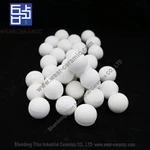
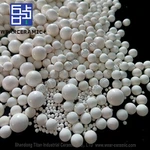
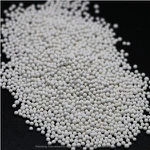


High-Purity Alumina Polishing Media
Material: 92%–99.7% Alumina (Al₂O₃)
Application: Surface Finishing / Metal Polishing / Vibratory Polishing
Product Introduction
TITAN High-Purity Alumina Polishing Media is developed for industrial surface finishing and precision processing. Its ceramic composition offers high hardness, wear resistance, and low metallic contamination risk, helping manufacturers maintain consistent finishing conditions across repeated production cycles.
Product Overview
High-purity alumina polishing media is a type of aluminum oxide-based ceramic material used in industrial finishing processes to improve surface quality, remove minor imperfections, and support consistent treatment of workpieces. It is suitable for applications where conventional metal media may introduce unwanted contamination or fail to provide the required wear performance.
TITAN offers alumina ceramic material options for different polishing and finishing requirements. Media specifications can be discussed according to the workpiece material, desired surface finish, processing equipment, and production conditions.
In industries where surface quality is critical-such as aerospace, automotive, hardware tools, and stainless steel manufacturing-alumina ceramic polishing balls have become a preferred media for surface finishing processes. With high hardness, excellent wear resistance, and chemical stability, these balls provide consistent and efficient polishing performance in various finishing machines.
Typical Process
Alumina polishing balls are commonly used in vibratory polishers, centrifugal finishing machines, and barrel tumblers. When combined with appropriate polishing compounds or slurries (e.g., alumina slurry or chromium oxide), they help deburr parts, smoothen surfaces, and achieve a uniform polish-ideal for mirror finishing or pre-treatment before coating or plating.
Key Features and Benefits
High Hardness for Reliable Surface Treatment
Alumina is a hard technical ceramic with strong resistance to scratching and surface abrasion. This property allows polishing media to maintain its working characteristics during repeated contact with workpieces.
The hardness of the selected media influences how it interacts with the surface being processed. For applications requiring controlled material removal, choosing the appropriate media grade and shape is important. Excessively aggressive media may damage delicate surfaces, while media that are too mild may not achieve the required finishing result.
TITAN can help customers evaluate suitable alumina options according to their workpiece material and finishing objectives.
01
High Purity for Reduced Contamination Risk
In precision manufacturing, surface appearance is not the only quality consideration. Contamination introduced during processing may also affect the performance or appearance of the finished product.
Alumina-based ceramic media can reduce the risk of metallic contamination associated with conventional steel polishing media. This is particularly relevant when processing ceramic components, selected metal parts, and materials with strict cleanliness requirements.
The actual purity requirement should be determined according to the workpiece and subsequent production steps. For demanding applications, buyers should confirm the alumina content and other relevant material specifications before ordering.
02
Wear Resistance for Repeated Processing
Polishing media are repeatedly exposed to friction, impact, and contact with workpieces. Excessive media wear can increase replacement costs and may affect the consistency of the finishing process.
The dense structure produced through controlled ceramic forming and high-temperature sintering contributes to the mechanical strength and wear resistance of alumina media.
Selecting a suitable grade can help maintain more stable processing conditions and reduce unnecessary media replenishment. Actual wear performance depends on equipment type, processing time, load, workpiece hardness, and operating conditions.
03
Chemical Stability in Suitable Processing Environments
Alumina ceramic offers resistance to many chemical substances and can be considered for selected wet-finishing processes.
This characteristic is useful when polishing operations involve water-based solutions or compatible processing compounds. However, chemical resistance is not universal. The liquid composition, pH, concentration, and operating temperature should be reviewed before selecting the media.
04
How to Choose the Right Alumina Polishing Media
Selecting polishing media involves more than comparing material grades. Buyers should evaluate the complete finishing process before making a purchasing decision.
Identify the Workpiece Material
Consider whether the parts are made from metal, ceramic, or another material. Workpiece hardness and surface sensitivity affect the required media characteristics.
01
Define the Desired Surface Finish
Clarify whether the purpose is deburring, smoothing, surface refinement, or another finishing operation. Different objectives may require different media sizes and shapes.
02
Match the Media to the Equipment
Provide the type of polishing or finishing machine, processing speed, loading conditions, and operating time. Media performance is closely related to the equipment and process parameters.
03
Confirm Purity Requirements
If contamination is a concern, specify the required alumina content and any restrictions on metallic impurities.
04
Evaluate Processing Results
For new applications, a trial using representative workpieces can help assess surface quality, processing time, media wear, and dimensional consistency before moving to bulk purchasing.
05
FAQ
01.What are the advantages of alumina ceramic polishing media?
02.What alumina content should I choose?
03.Can this media be used for metal polishing?
04.How do I choose the correct media size and shape?
05.Can TITAN provide customized polishing media?
06.What information is required for a quotation?
ooking for high-purity ceramic media for precision surface finishing?
Contact TITAN and tell us about your workpiece material, required surface finish, processing equipment, preferred alumina content, and estimated order quantity.
If you have product drawings, samples, or existing media specifications, our team can review them to discuss a suitable option.
Get in touch with TITAN today to discuss your alumina polishing media requirements and request a quotation.
Hot Tags: high-purity alumina polishing media, manufacturers, suppliers, factory, price, made in China, Ceramic Grinding Ball, 92 Alumina Ceramic Ball, ceramic alumina grinding, media milling, Inert ceramic balls, High Alumina Ball
You Might Also Like


Send Inquiry