


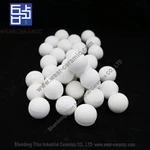
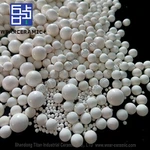


Inert Alumina Ceramic Packing Ball As Catalyst Bed Support Media

Inert Alumina Ceramic Packing Ball As Catalyst Bed Support Media

Inert Alumina Ceramic Packing Ball As Catalyst Bed Support Media

Inert Alumina Ceramic Packing Ball As Catalyst Bed Support Media

Inert Alumina Ceramic Packing Ball As Catalyst Bed Support Media

Inert Alumina Ceramic Packing Ball As Catalyst Bed Support Media
Inert Alumina Ceramic Packing Ball As Catalyst Bed Support Media
Product Material: Alumina ceramic
Al2O3 : 80% 92% 95% 99%
Bulk density(g/cm3) : >= 2.5-2.8 3.1 3.3-3.7
water absorption (%): <=5
Shock resistance : Good
Product Size: 3mm 6mm 8mm 10mm 13mm 19mm 25mm 50mm
Product Color: White
Certifified: ISO 9001
Application:widely used in petroleum, chemical, fertilizer, natural gas and environmental protection industries as the covering support material and tower packing for the catalyst in the reactor.
Product Introduction
TITAN Inert Alumina Ceramic Packing Balls provide reliable support and protection for catalyst beds in industrial reactors. Their hard ceramic structure, low water absorption, and chemical stability help maintain bed integrity, support process flow, and reduce the risk of contamination during operation.
Product Overview

Inert Alumina Ceramic Packing Balls are non-catalytic ceramic media used as support materials in reactors, catalyst beds, and chemical processing systems. Made from alumina-based ceramic materials and fired at high temperatures, they provide a stable layer beneath or around catalyst materials. Their primary function is to support the catalyst bed, help distribute process fluids, and protect downstream equipment from catalyst movement or loss.
Unlike active catalysts, these ceramic support balls do not primarily participate in chemical reactions. Instead, they serve as a structural component that contributes to reliable reactor operation.
Details
Inert alumina ceramic balls (catalyst proppants) are widely used as catalyst carrier fillers in the world because of their excellent stability and reliability. Produced from high quality ChemClay material, they have very good stability, high mechanical strength and thermal shock resistance, which makes them ideal for supporting all types of catalysts.
How are alumina filler balls processed?
The superfine-grain calcined alumina micropowder is the raw material of alumina filler balls. After being stirred and mixed by automatic mixing equipment, it is formed by a ball forming machine, and then calcined at a high temperature tunnel kiln at 1600°C to finally form.
Key Features and Benefits
Chemical Stability in Process Environments
Alumina ceramic is widely used in industrial packing applications because of its stable inorganic structure. Properly selected grades can resist many common process environments and maintain their physical form during operation.
This helps reduce the risk of support media degradation and unwanted contamination. However, compatibility depends on the chemical composition, concentration, temperature, and pressure of the process. Buyers should confirm suitability for their specific operating conditions.
01
Mechanical Strength for Catalyst Bed Support
Catalyst beds contain multiple layers of materials that must remain properly positioned during operation. The ceramic balls provide a supporting layer that helps distribute the load and reduce direct contact between catalyst materials and the reactor's internal support structure.
Their rigid ceramic body is designed to withstand the mechanical demands of packed-bed systems. Appropriate ball size and grade selection are important for maintaining bed stability and avoiding excessive pressure on individual components.
02
Low Water Absorption
Low water absorption helps limit liquid penetration into the ceramic body. This is useful in applications where moisture uptake may affect the stability or handling characteristics of packing materials.
TITAN offers different alumina grades to meet varying process requirements. The actual water absorption value should be confirmed according to the selected grade and its technical specification.
03
Spherical Geometry for Consistent Packing
The rounded shape allows the media to form a packed layer inside a reactor or vessel. Selecting an appropriate diameter helps control packing structure, void space, and fluid passage.
A suitable support layer can help reduce uneven loading and provide a stable base for catalyst materials. The final packing arrangement should be designed according to reactor dimensions, flow rate, and process requirements.
04
Technical specific
|
Series |
BMTL80 |
BMTL92 |
BMTL95 |
BMTL99 |
|
AL2O3 (%) |
≥80 |
≥92 |
≥95 |
≥99 |
|
Water absorption(%) |
≤5 |
≤5 |
≤5 |
≤5 |
|
Bulk density(g/cm3) |
2.5-2.8 |
≥2.8 |
≥3.1 |
3.3-3.7 |
|
Shock resistance (%) |
Good |
Good |
Good |
Good |
|
Dimension(mm) |
3mm 6mm 8mm 10mm 13mm 19mm 25mm 50mm |
|||
Application
Inert alumina ceramic packing ball as catalyst Bed support media is mainly used in the high temperature, high pressure, and highly corrosive working environment of the chemical industry, and in the reformer, reaction furnace, and packed tower in the vast petroleum and chemical industries to prevent the equipment covered by the filtered silica from forming dirt or damaging the catalyst carrier.
Our Other product

The production process

FAQ
01.Can I place sample order?
02.Can | print my logo?
03.How to order the products?
Step1. Tell us what model and quantity you need, Get Latest Quote
Step2. Make Proforma Invoice
Step3. Confirmed PI to us, and arrange the payment.
Step4. Once we get payment, we will make production samples to confirmed.
Step5. After confirmed, start to produce.
04.How do we make the payment?
05.What's the delivery time?
06.How would the goods be shipped?
Looking for dependable ceramic support media for your catalyst bed or reactor packing system?
Contact TITAN with your technical requirements. Our team can help you select a suitable grade and size of inert alumina ceramic balls and provide a quotation for your project.
Hot Tags: inert alumina ceramic packing ball as catalyst bed support media, manufacturers, suppliers, factory, price, made in China, Alumina Support Balls, Thermal Storage Ceramic Ball, Alumina Ceramic Stuffing Balls, alumina ceramic balls, Sintered Alumina Ceramic Ball, High Purity Alumina Filler Ball
You Might Also Like


Send Inquiry