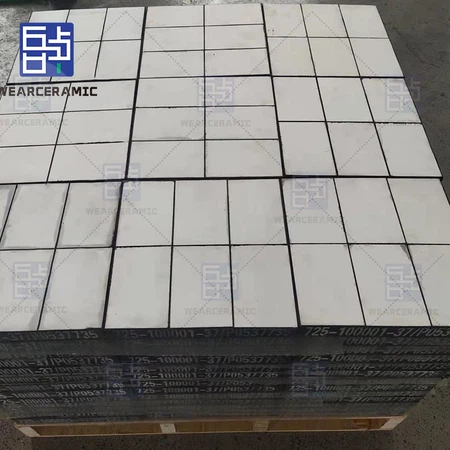

The Challenge of High-Abrasion Industrial Environments
In mining, cement, power generation, and bulk material handling, equipment is constantly exposed to abrasive particles and continuous material flow.
Traditional metal liners often suffer from rapid wear, deformation, and frequent replacement, resulting in high maintenance costs and unplanned downtime.
Fundamental Differences in Wear Resistance
The superior performance of ceramic-based wear plates comes from their extreme hardness. Alumina and ZTA ceramics typically achieve Mohs hardness values above 8.5, far exceeding those of conventional metals.
In abrasive-dominated conditions, ceramic liners resist cutting and scratching, delivering service lives 5–10 times longer than metal liners.
Reduced Maintenance and Improved Equipment Availability
Thanks to their low wear rate, ceramic lining systems significantly extend maintenance intervals.
This leads to fewer shutdowns, lower labor costs, and higher equipment availability-key advantages for continuous-operation plants.
Composite Structures for Combined Abrasion and Impact
Modern ceramic composite liners combine hard ceramic tiles with elastic or structural backing layers.
This design allows the system to absorb impact energy while maintaining high abrasion resistance, making it suitable for mixed wear conditions.
Improved Material Flow and Energy Efficiency
The smooth surface of ceramic wear-resistant linings reduces friction and material build-up.
As a result, material flows more consistently, blockages are minimized, and overall system energy consumption is reduced.
Long-Term Economic Benefits
Although the initial cost of ceramic lining solutions is higher than that of metal liners, the total cost of ownership is significantly lower due to longer service life, reduced downtime, and improved equipment protection.
Conclusion
In high-abrasion industrial applications, ceramic liners have proven to be a superior alternative to traditional metal liners.
With outstanding wear resistance, reduced maintenance requirements, and long-term cost advantages, ceramic wear protection systems represent a smarter choice for modern industrial operations.