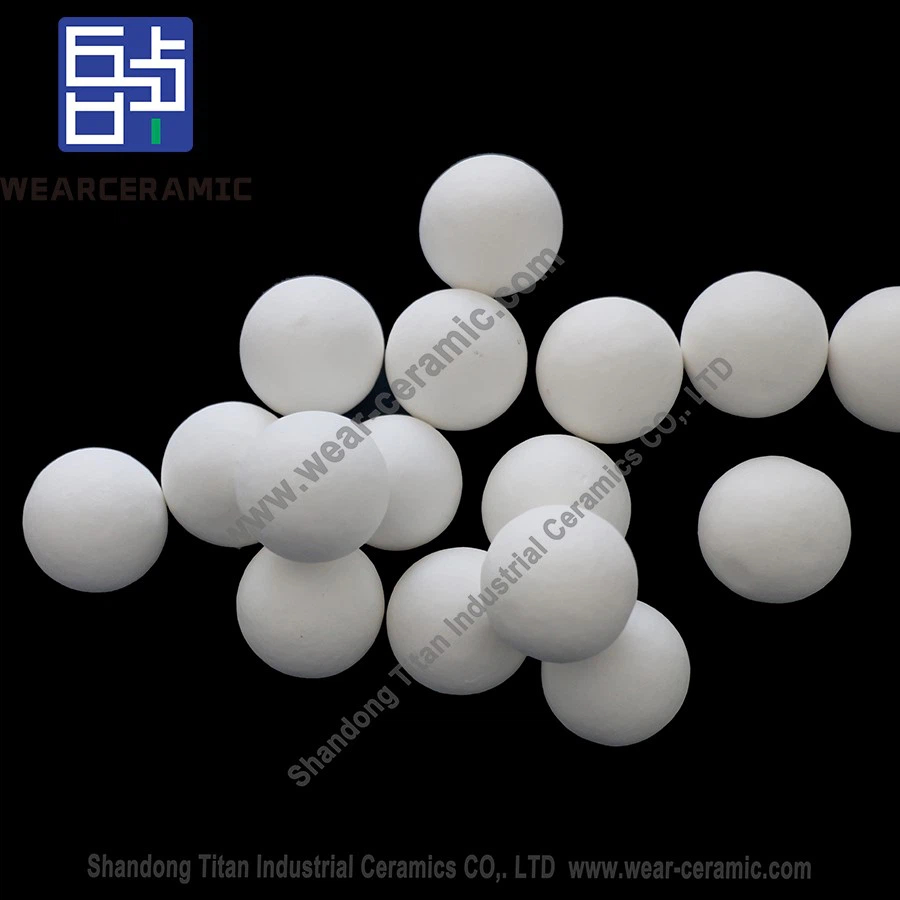

Rolling forming and isostatic pressing are two commonly used technologies for manufacturing alumina ceramic balls. There are certain differences in material structure, manufacturing process and finished product quality. The specific differences are as follows.
1. Different material structure
Rolling-formed alumina ceramic balls are usually composed of small particles and fiber structures, with rough and uneven surfaces and low strength. Isostatically pressed alumina ceramic balls usually have a crystalline structure, smooth surface, excellent strength and a long service life.
2. Different manufacturing processes
Rolling forming usually uses a ball mill to roll and rotate, so that the particles are continuously rubbed with other particles or walls, and then crushed and formed. Isostatic pressing technology is a technology that fills powder or particles into a mold and applies high pressure to form.
3. Different finished product quality
Because the spheres formed by isostatic pressing technology are more regular and denser, the quality of alumina ceramic balls is usually better than that of rolling-formed ceramic balls. Rolling-formed alumina ceramic balls are prone to excessive pores, resulting in reduced strength.
In summary, there are obvious differences in material structure, preparation process and finished product quality between rolling-formed alumina ceramic balls and isostatically pressed alumina ceramic balls. Therefore, it is necessary to select specific usage scenarios according to different needs.