


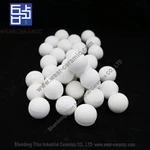
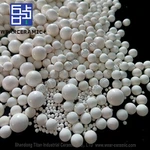


Wear Resistant 92% Alumina Ceramic Balls
Product Details
Mistake 1: Focusing Only on Purchase Price
When comparing quotations from different suppliers, many buyers naturally pay attention to the unit price first.
While a lower price may seem attractive at the beginning, it does not necessarily mean lower operating costs. Grinding media is a consumable product, and its real value should be evaluated over its entire service life.
In many dry grinding plants, lower-quality grinding balls wear out quickly, leading to frequent replenishment, production interruptions, and increased labor costs. Over time, these hidden expenses often exceed the initial savings achieved through a lower purchase price.
A practical purchasing strategy is to compare wear performance and annual consumption instead of considering only the quotation.
Mistake 2: Ignoring the Working Conditions of the Mill
Not all grinding systems operate under the same conditions.
Some mills process highly abrasive materials such as quartz, clinker, and refractory raw materials. Others handle softer minerals or ceramic powders.
Selecting grinding media without considering the actual grinding environment can lead to premature wear or inefficient milling performance.
Before choosing grinding balls, buyers should evaluate:
Material hardness
Feed particle size
Required final fineness
Mill type
Production capacity
Understanding these parameters helps determine the most suitable alumina ceramic grinding media solution.
Mistake 3: Using a Single Ball Size Throughout the Entire Mill
Another common issue is loading only one ball diameter into the grinding chamber.
Although this approach simplifies purchasing and inventory management, it often reduces grinding efficiency.
Large grinding balls generate stronger impact forces and are effective for breaking coarse particles. Smaller balls provide more contact points and are better suited for fine grinding stages.
A properly designed combination of multiple sizes allows the grinding process to achieve a balance between impact and attrition, resulting in improved particle size distribution and higher productivity.
Mistake 4: Overlooking Product Purity Requirements
In some industries, contamination can become a hidden cost.
When metallic grinding media wear during operation, small amounts of metal may enter the final product. This may not be a major concern for some applications, but it can affect product quality in industries where purity is important.
Alumina ceramic balls provide an advantage because of their chemical stability and low contamination characteristics.
Industries that frequently benefit from ceramic grinding media include:
Ceramic powder production
White cement manufacturing
Electronic ceramic materials
Refractory raw materials
Specialty mineral processing
For these applications, selecting alumina grinding balls helps maintain product consistency and reduce quality-related risks.
Mistake 5: Choosing a Supplier Without Quality Verification
Even when two grinding balls have similar specifications on paper, their actual performance may differ significantly.
Factors such as raw material quality, forming technology, firing temperature, and quality control standards all influence the final product.
Reliable manufacturers typically perform inspections covering:
Alumina content
Bulk density
Water absorption
Hardness
Wear resistance
Dimensional consistency
Consistent quality is essential because unstable grinding media performance can directly affect production efficiency and maintenance schedules.
Why More Manufacturers Are Switching to Alumina Grinding Balls
As production costs continue to rise, manufacturers are increasingly focusing on long-term operating efficiency.
Compared with conventional grinding media, alumina ceramic balls offer several practical advantages:
Lower wear consumption
Longer service life
Reduced contamination
Improved grinding stability
Lower maintenance frequency
Better cost performance over time
These benefits explain why alumina grinding media is widely used in cement plants, ceramic factories, mining operations, refractory production facilities, and industrial powder processing systems.
Final Thoughts
Selecting grinding media should not be viewed as a simple purchasing task. It is an important operational decision that directly influences production costs, product quality, and equipment efficiency.
By avoiding common selection mistakes and choosing suitable alumina ceramic grinding balls, manufacturers can achieve more stable production performance and better long-term economic results.
Product Advantages
Excellent wear resistance for dry grinding applications
Stable performance under continuous operation
Reduced grinding media consumption
Lower contamination risk
Suitable for high-volume industrial production
Long service life
Competitive factory-direct pricing
Multiple sizes available
Applications
Cement Manufacturing
Ceramic Powder Processing
Mining Industry
Refractory Production
Quartz Grinding
Feldspar Processing
Chemical Powder Production
Industrial Mineral Processing
Why Choose Us
Experienced manufacturer of wear-resistant ceramic materials
Strict production and inspection standards
Stable supply capacity for large orders
Flexible packaging solutions
Fast technical support
Global export experience
Customized grinding media recommendations
CTA
Looking for a grinding media solution that reduces wear costs and improves dry grinding efficiency?
Contact us today with your mill specifications, grinding material, and annual consumption requirements. Our technical team will recommend the most suitable alumina ceramic grinding balls and provide a competitive quotation tailored to your application.
FAQ
Q1: Why is grinding media selection important?
Grinding media directly affects milling efficiency, wear consumption, product quality, and overall operating costs.
Q2: Are alumina ceramic balls suitable for dry grinding?
Yes. Alumina grinding balls are widely used in dry grinding systems because of their excellent wear resistance and stable performance.
Q3: How can I determine the correct ball size?
The optimal size depends on material hardness, feed size, mill design, and required final particle size.
Q4: Can alumina grinding balls help reduce contamination?
Yes. Compared with metallic grinding media, alumina ceramic balls introduce significantly less contamination during grinding.
Q5: Do you offer technical support before ordering?
Yes. We can recommend suitable grinding media specifications based on your milling conditions and production requirements.
Hot Tags: wear resistant 92% alumina ceramic balls, manufacturers, suppliers, factory, price, made in China, ceramic alumina grinding, High Alumina Ceramic Grinding Balls, Inert Alumina Ceramic Filler Balls, milling ceramics, Sintered Alumina Ceramic Hole Ball, wear liners mining
You Might Also Like


Send Inquiry