





High-Performance Alumina Grinding Media For Precise Milling
Product Introduction
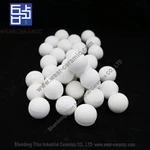
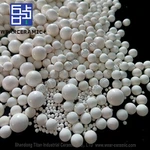
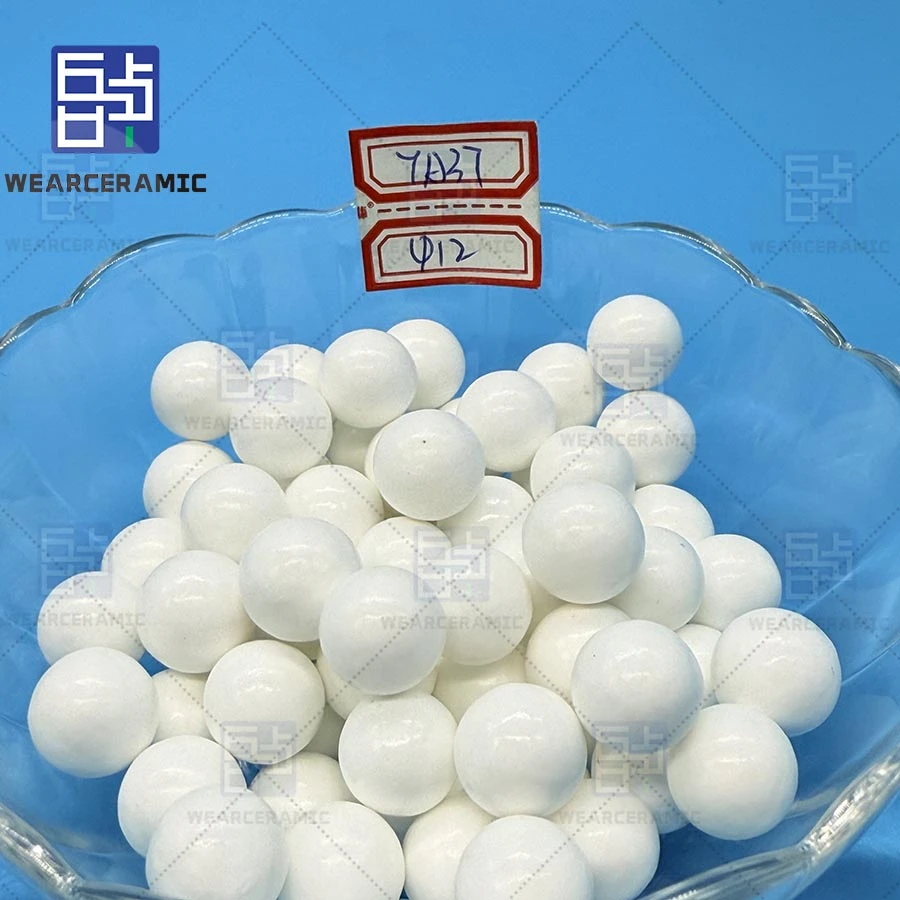
TITAN High-Performance Alumina Grinding Media is designed for precise particle size reduction and stable milling performance. With high hardness, controlled wear characteristics, and multiple size and material options, it helps manufacturers achieve consistent grinding results while reducing media consumption and unwanted metallic contamination.
Product Overview

This alumina grinding media is manufactured from high-quality raw alumina with a minimum AL₂O₃ content of ≥92%. Each bead is formed and sintered under controlled conditions to ensure dimensional consistency, high density, and outstanding surface integrity. Sophisticated quality control systems inspect every batch before shipment, guaranteeing dependable performance in industrial milling processes.
These grinding balls are used to improve particle size reduction, enhance milling efficiency, and reduce downtime caused by media wear. Their robust material characteristics allow them to withstand rigorous grinding environments, offering long service life and lower replacement frequency compared to ordinary media.
High-performance alumina grinding media consists of dense aluminum oxide ceramic balls and beads used to grind, disperse, and refine materials in industrial milling equipment. Their hardness, density, and resistance to abrasion make them suitable for applications where consistent particle size and material purity are important.
TITAN manufactures different grades of alumina ceramic grinding media, including 92% and 95% alumina options, with selected high-wear-resistance grades available for demanding milling conditions. Different diameters can be supplied to match ball mills, stirred mills, planetary mills, and other grinding systems.
Key Features & Benefits
Hard-Wearing Construction for Long Service Life
Thanks to their high alumina content and optimized sintering process, these grinding balls resist abrasion better than standard media. This means your milling equipment experiences less wear, and the beads retain their shape and size longer, reducing the need for frequent replenishment.
Balanced Density for Efficient Grinding
With a density of 3.70 g/cm³, these grinding balls deliver strong impact forces during milling. The improved energy transfer results in faster particle breakdown and more uniform results, which increases throughput without sacrificing product quality.
High Hardness for Stability Under Stress
These beads register an 11 GPa Vickers hardness, which helps them sustain intense load conditions without cracking or deforming. This strength factor directly contributes to prolonged service life and consistent milling behavior.
Excellent Roundness Ensures Smooth Action
The 96% roundness rate minimizes jarring and uneven contact in mills, helping to reduce grinding noise, vibration, and abnormal wear on equipment. This smoother motion supports a more stable grinding process and slower wear progression.
Quality Control & Manufacturing Insight
Our ceramic grinding balls go through multiple quality checkpoints:
Raw Material Inspection
We use only top-grade alumina with controlled impurity levels.
Forming Precision
Automated systems shape the beads uniformly to minimize variation.
Sintering Control
Temperature and atmosphere are closely monitored to enhance density and mechanical stability.
Final Testing
Shape, wear resistance, density, and surface integrity are verified before shipment.
This rigorous quality protocol means you receive material you can trust - batch after batch - without performance surprises.

Who Benefits Most
This product is suitable for industries and applications where consistent particle size and minimal contamination are required, for example:
Precision ceramics production
Fine grinding of pigments or coatings
Chemical material dispersion
Any milling process where high wear resilience and stable performance matter
Because this media produces reliable results over extended milling runs, it helps reduce operational cost while supporting consistent output quality.
After-Sales Support & Service
We back every order with reliable support:
Responses within 24 hours
01
Sample support prior to bulk purchase
02
Milling application recommendations
03
Technical troubleshooting
04
Replacement support for verified component issues
05
We treat your success as part of our service mission.
Why Choose Our Alumina Grinding Balls
Rather than selling the cheapest option on the market, we offer what truly matters in industrial milling:
Reliable Performance
Proven wear resistance over extended runs
Predictable Costs
Longer media life and less frequent replacement
Stable Quality
Uniform performance across production batches
Application Guidance
Practical advice for your milling setup
These factors mean fewer interruptions, more consistent results, and confidence in your milling media choice.

FAQ
01.What are alumina grinding media used for?
02.What is the difference between 92% and 95% alumina grinding media?
03.Which diameter is suitable for fine grinding?
04.Can alumina ceramic media reduce metallic contamination?
05.How can I reduce grinding media wear?
06.Can TITAN supply customized sizes or bulk orders?
Looking for ceramic grinding media for fine powder production, mineral processing, or precision material dispersion?
Contact TITAN with your required alumina content, media diameter, mill type, raw material, target particle size, and order quantity. Our team can review your requirements and provide product information and a quotation based on your application.
Choose the right grinding media for your process. Contact TITAN today to discuss your milling requirements.
Hot Tags: high-performance alumina grinding media for precise milling, manufacturers, suppliers, factory, price, made in China, alumina ceramic media, Inert Alumina Ceramic Grinding Balls, Alumina Ceramic Grinding Beads, High Alumina Ceramic Grinding Balls, Ceramic grinding balls, High Alumina Ball
You Might Also Like


Send Inquiry